股骨发育不良-特殊面容综合征
(Femoral Hypoplasia - Unusual Facies Syndrome) 骨骼与结缔组织遗传病 全本详注版| 致病基因 / 机制 | 染色体定位 | 遗传方式 | 发病率估计 |
|---|---|---|---|
| 未知(多数为散发性;部分家系提示常染色体显性遗传但致病基因未明确) | 未明确 | 多数为散发性;部分家系呈常染色体显性遗传;部分家系呈多因子遗传;超过20%的病例与母体糖尿病相关 | 罕见,确切发病率未知 |
疾病概述与分子发病机理 (Genetics & Basic Defects)
流行病学数据、致病突变位点、信号转导通路及组织病理生理学
流行病学与全篇概述
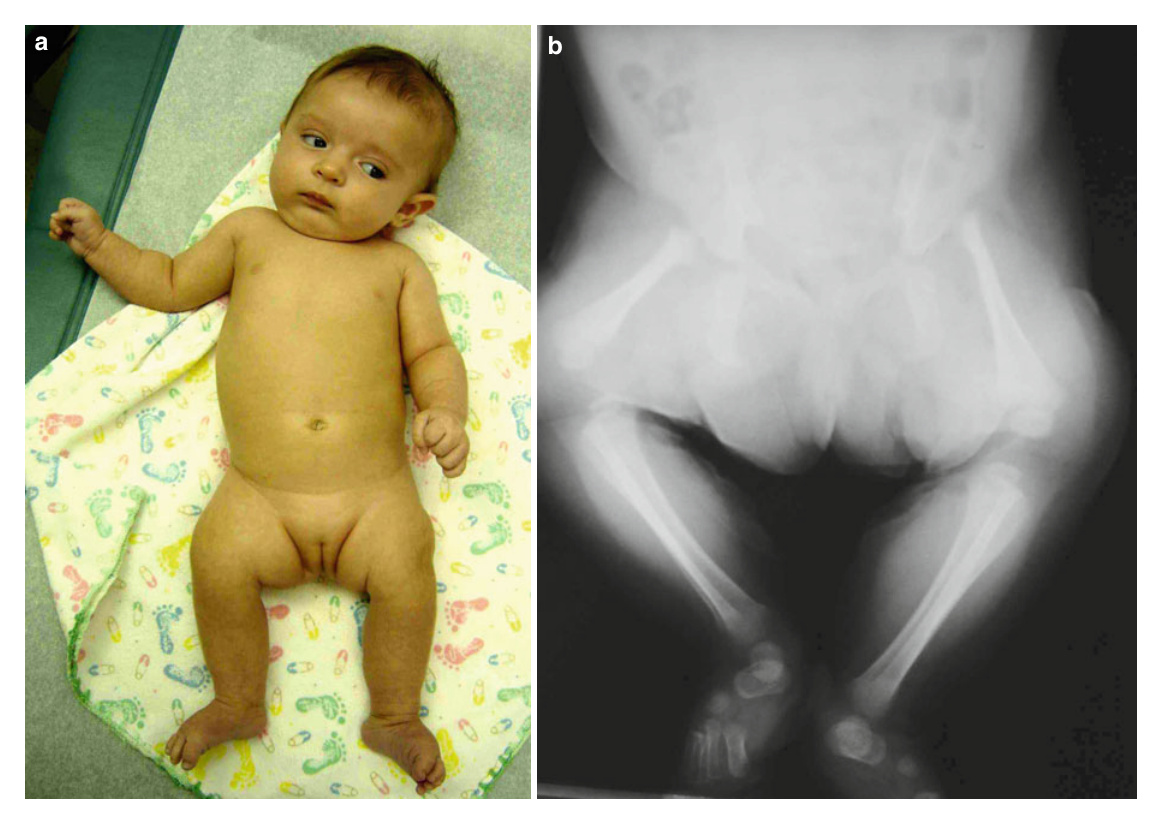
股骨发育不良-特殊面容综合征(Femoral Hypoplasia – Unusual Facies Syndrome)由Daentl等于1973年首次描述,是一种以股骨发育不良(hypoplasia)或缺失(aplasia)合并特殊面容为特征的罕见畸形综合征,又称股骨-面部综合征(femoral-facial syndrome)。该综合征在四个无亲缘关系的个体中被 delineate,表现为股骨发育不良与特殊面容的独特组合。遗传学基础尚不明确:多数病例为散发性(sporadic);部分家系报道呈常染色体显性遗传(autosomal dominant inheritance);部分家系提示多因子遗传(multifactorial trait);超过20%的报道病例中母体糖尿病(maternal diabetes)为致病因素。可能的病因包括严重羊水过少(severe oligohydramnios)导致的胎儿约束(fetal constraint/deformation)、母体糖尿病(disruption)以及尚未确定的病因。临床特征包括特殊面容(向上倾斜的眼裂、短鼻伴宽鼻尖、人中延长、上唇薄、小颌畸形、腭裂、低位耳)、股骨发育不良/缺失(通常不对称,多数病例存在一定程度的下肢短缩,短缩程度取决于股骨缺失或发育不良的程度,可伴或不伴腓骨缺失)、因下肢长度缩短导致的身材矮小、智力正常。其他异常包括多数病例的畸形足(club foot)、偶见多指/并指、Sprengel畸形、上肢发育不良、肘关节活动受限、肩关节僵硬、骨盆和脊柱异常、腹股沟疝、泌尿生殖系统异常(肾发育不良/不良、多囊肾、隐睾、生殖器发育不良如阴茎发育不良或大阴唇发育不良、肾位置偏低、分隔膀胱)、罕见心血管异常(室间隔缺损、肺动脉狭窄、动脉干)。鉴别诊断包括后凸肢端发育不良(kyphomelic dysplasia)、弯曲肢端发育不良(campomelic dysplasia)和Antley-Bixler综合征。诊断依靠影像学检查(下颌骨发育不良、股骨发育不良包括股骨近端局灶性缺陷、较少见的胸肋椎异常、较少见的上肢异常)和组织病理学。遗传咨询需根据遗传模式评估再发风险,产前超声诊断在高危家系中可行,管理包括腭裂修复、心血管和泌尿生殖系统并发症的护理以及肢体畸形和髋关节发育不良的骨科管理。
遗传模式与家系特征
多数病例为散发性(sporadic)。部分家系报道呈常染色体显性遗传(autosomal dominant inheritance),患者子代再发风险为50%。部分家系提示多因子遗传(multifactorial trait)。超过20%的报道病例中母体糖尿病(maternal diabetes)为致病因素,母体糖尿病患者的再发风险显著增加。散发病例的患者同胞再发风险不增加;常染色体显性遗传家系中,除非父母之一患病,否则同胞再发风险不增加。
致病基因与突变谱系
致病基因尚未明确。部分家系提示常染色体显性遗传但未定位具体基因;有报道该综合征与X染色体三体(chromosome X trisomy)相关,但非常规关联。未发现明确的突变类型或谱系分型。
组织病理生理机制与解剖学缺陷
可能的机制包括:严重羊水过少(severe oligohydramnios)导致的胎儿约束(fetal constraint/deformation);母体糖尿病(maternal diabetes)导致的发育破坏(disruption);以及尚未确定的病因。组织病理学显示股骨标本可见透明软骨(hyaline cartilage)伴纤维性发育不良(fibrous dysplasia)灶;另一例患者显示生长板(growth plate)排列紊乱及静息软骨基质(resting cartilage matrix)相对减少。
权威原著彩色临床图谱库 共 1 套超清图解
原著 200 DPI 高清无损裁切 • 完整保留图面 a, b, c, d 子标识 • 点击图面唤起全屏无损灯箱
临床表型全貌与自然转归 (Clinical Features)
主要症状、核心体征、严重度分型、各期并发症及长期预后
1. 主要临床症状 (Major Clinical Symptoms)
下肢短缩
股骨发育不良/缺失导致下肢短缩,通常不对称,多数病例存在一定程度的下肢短缩,短缩程度取决于股骨缺失或发育不良的程度,可伴或不伴腓骨缺失。
身材矮小
因下肢长度缩短导致身材矮小(short stature)。
智力正常
智力发育正常(normal intelligence)。
畸形足
多数病例出现畸形足(club foot)。
上肢异常
偶见多指/并指(polydactyly/syndactyly)、上肢发育不良(upper extremity hypoplasia)、肘关节活动受限(restricted motion of the elbows)、肩关节僵硬(stiff shoulders)。
Sprengel畸形
先天性肩胛骨抬高(Sprengel’s deformity)。
骨盆和脊柱异常
骨盆和脊柱异常(pelvic and spinal abnormalities)。
腹股沟疝
腹股沟疝(inguinal hernia)。
泌尿生殖系统异常
肾发育不良/不良(hypoplastic/dysplastic kidneys)、多囊肾(polycystic kidneys)、隐睾(cryptorchidism)、生殖器发育不良(genital hypoplasia)包括阴茎发育不良(hypoplastic penis)和大阴唇发育不良(hypoplastic labia majora)、肾位置偏低(inferiorly placed kidneys)、分隔膀胱(septated urinary bladder)。
心血管异常(罕见)
室间隔缺损(ventricular septal defect)、肺动脉狭窄(pulmonary stenosis)、动脉干(truncus arteriosus)。
2. 主要体格检查体征 (Major Clinical Signs)
特殊面容
向上倾斜的眼裂(up-slanting eyes)、短鼻伴宽鼻尖(short nose with broad tip)、人中延长(elongated philtrum)、上唇薄(thin upper lip)、小颌畸形(micrognathia)、腭裂(cleft palate)、低位耳(low-set ears)。
股骨发育不良/缺失
股骨发育不良(hypoplasia)或缺失(aplasia),通常不对称(asymmetric),可表现为股骨近端局灶性缺陷(proximal femoral focal deficiency)。
下肢短缩
下肢短缩,程度取决于股骨缺失或发育不良的程度,可伴或不伴腓骨缺失。
其他骨骼异常
胸廓异常(先天性肩胛骨抬高/Sprengel畸形)、肋骨异常(缺失、发育不良、融合)、脊柱异常(椎体发育不良、半椎体、隐性脊柱裂、腰椎侧弯、骶骨发育不良)、骨盆异常(髂骨翼小、闭孔宽大、髋臼发育不良/缺失伴髋关节脱位)、上肢异常(肱骨发育不良、桡肱/桡尺骨融合、手尺偏)。
3. 并发症与生命安全风险 (Complications / Risks)
- 髋关节发育不良和脱位
- 腭裂导致喂养困难和语言障碍
- 心血管并发症(室间隔缺损、肺动脉狭窄、动脉干)
- 泌尿生殖系统并发症(肾发育不良、多囊肾、隐睾、生殖器发育不良)
- 骨科畸形导致运动受限
- 气道管理困难(小颌畸形相关)
- 呼吸系统并发症(胸廓异常相关)
4. 自然病程、寿命预后与致死性亚型 (Prognosis & Lethal Forms)
- 智力正常,发育预后取决于骨骼和器官畸形的严重程度
- 多数患者可行走(ambulatory),但可能有严重骨科残疾
- 严重心血管或泌尿生殖系统畸形可能影响寿命
- 无严重内脏畸形的患者预期寿命正常
辅助检查与全解剖部位影像征象 (Diagnostic Investigations)
骨骼放射平片解剖细分、颅颈磁共振MRI、组织病理学及分子诊断流程
放射影像学特征(各解剖部位细分征象 Radiologic Features)
- 下颌骨发育不良(mandibular hypoplasia)
- 股骨发育不良(femoral hypoplasia)
- 股骨近端局灶性缺陷(proximal femoral focal deficiency)
- 先天性肩胛骨抬高(Sprengel’s deformity)
- 肋骨缺失(absent ribs)
- 肋骨发育不良(hypoplastic ribs)
- 肋骨融合(fused ribs)
- 椎体发育不良(dysplastic vertebrae)
- 半椎体(hemivertebrae)
- 隐性脊柱裂(spina bifida occulta)
- 腰椎侧弯(lumbar scoliosis)
- 骶骨发育不良(sacral dysgenesis)
- 髂骨翼小(small iliac wings)
- 闭孔宽大(wide obturator foramen)
- 髋臼发育不良/缺失伴髋关节脱位(hypoplasia/aplasia of the acetabula with dislocation of the hips)
- 肱骨发育不良(hypoplasia of the humerus)
- 桡肱/桡尺骨融合(radiohumeral/radioulnar synostosis)
- 手尺偏(ulnar deviation of the hands)
生长板组织病理学 (Histology / Pathology)
- 股骨标本显示透明软骨(hyaline cartilage)伴纤维性发育不良(fibrous dysplasia)灶
- 另一例患者显示生长板(growth plate)排列紊乱及静息软骨基质(resting cartilage matrix)相对减少
分子与细胞遗传学检测策略 (Mutation Analysis)
- 目前无特异性分子诊断;可考虑进行染色体微阵列分析(CMA)排除染色体异常(如X染色体三体)
- 对疑似常染色体显性遗传家系可考虑全外显子组测序(WES)研究,但致病基因尚未明确
遗传咨询、再发风险与全生命周期健康监护
生殖腺嵌合体风险量化、产前鉴别生长曲线及 AAP 临床监护规范
再发风险量化评估 (Recurrence Risk Assessment)
- 散发病例:患者同胞再发风险不增加
- 常染色体显性遗传家系:患者同胞再发风险不增加,除非父母之一患病;患者子代再发风险为50%
- 母体糖尿病相关病例:再发风险显著增加(母体糖尿病控制情况相关)
产前筛查、超声鉴别与分子确诊路径 (Prenatal Diagnosis)
产前超声检查
在高危家系中可行产前超声诊断,可发现小颌畸形(micrognathia)、腭裂(cleft palate)、其他面部特征、股骨短且弯曲(short, bowed femora)。
产前超声(详细)
可评估股骨长度、形态及下肢短缩程度,结合面部轮廓评估小颌畸形和腭裂,必要时行三维超声或胎儿MRI辅助诊断。
临床健康监护与多学科干预方案 (Management & Health Supervision Protocol)
腭裂修复
腭裂修复手术(cleft palate repair),按标准时机进行,并配合喂养和语言治疗。
心血管和泌尿生殖系统并发症护理
对心血管异常(室间隔缺损、肺动脉狭窄、动脉干)和泌尿生殖系统异常(肾发育不良、多囊肾、隐睾、生殖器发育不良)进行专科评估和相应管理。
骨科管理
肢体畸形和髋关节发育不良的骨科管理(orthopedic management of limb deformity and hip dysplasia),包括矫形支具、物理治疗和必要时手术干预。
气道管理
小颌畸形患者需注意气道管理困难,麻醉前应充分评估。
多学科随访
建议儿科、骨科、整形外科、泌尿外科、心脏科和遗传咨询多学科团队长期随访。
权威原著参考文献 (References)
Harold Chen 著作全书收录之经典学术文献与循证医学来源
- Baraitser, M., Reardon, W., Oley, C., et al. (1994). Femoral hypoplasia unusual facies syndrome with preaxial polydactyly. Clinical Dysmorphology, 3, 40–45.
- Burn, J., Winter, R. M., Baraitser, M., et al. (1984). The femoral hypoplasia-unusual facies syndrome. Journal of Medical Genetics, 21, 331–340.
- Daentl, D. L., Smith, D. W., Scott, C. I., et al. (1973). Femoral hypoplasia-unusual facies syndrome. Journal of Pediatrics, 86, 107–111.
- DePalma, L., Duray, P. H., & Popeo, V. R. (1986). Femoral hypoplasia-unusual facies syndrome: Autopsy findings in an unusual case. Pediatric Pathology, 5, 1–8.
- Eastman, J. R., & Escobar, V. (1978). Femoral hypoplasia-unusual facies syndrome: A genetic syndrome? Clinical Genetics, 13, 72–76.
- Giacoia, G. P., & Tunnessen, W. W., Jr. (1996). Picture of the month. Femoral hypoplasia-unusual facies syndrome. Archives of Pediatrics & Adolescent Medicine, 150, 761–762.
- Gleiser, S., Weaver, D. D., Escobar, V., et al. (1978). Femoral hypoplasia-unusual facies syndrome, from another viewpoint. European Journal of Pediatrics, 128, 1–5.
- Gonçalves, L. F., De Luca, G. R., Vitorello, D. A., et al. (1996). Prenatal diagnosis of bilateral proximal femoral hypoplasia. Ultrasound in Obstetrics & Gynecology, 8, 127–130.
- Hinson, R. M., Miller, R. C., & Macri, C. J. (1996). Femoral hypoplasia and maternal diabetes: Consider femoral hypoplasia/unusual facies syndrome. American Journal of Perinatology, 13, 433–436.
- Holmes, L. B. (1975). Letter: Femoral hypoplasia-unusual facies syndrome. Journal of Pediatrics, 87, 668–669.
- Hurst, D., & Johnson, D. F. (1980). Brief clinical report: Femoral hypoplasia–unusual facies syndrome. American Journal of Medical Genetics, 5, 255–258.
- Iohom, G., Lyons, B., & Casey, W. (2002). Airway management in a baby with femoral hypoplasia-unusual facies syndrome. Paediatric Anaesthesia, 12, 461–464.
- Johnson, J. P., Carey, J. C., Gooch, W. M., 3rd, et al. (1983). Femoral hypoplasia-unusual facies syndrome in infants of diabetic mothers. Journal of Pediatrics, 102, 866–872.
- Lampert, R. P. (1980). Dominant inheritance of femoral hypoplasia-unusual facies syndrome. Clinical Genetics, 17, 255–258.
- Lomo, A., & Headings, V. (1980). Femoral hypoplasia–unusual facies syndrome and chromosome X trisomy. Southern Medical Journal, 73, 1669–1670.
- Lord, J., & Beighton, P. (1981). The femoral hypoplasia-unusual facies syndrome: A genetic entity? Clinical Genetics, 20, 267–275.
- Nguyen, N. H., & Mayhew, J. F. (2003). Airway management in a baby with femoral hypoplasia–unusual facies syndrome. Paediatric Anaesthesia, 13, 87.
- Pitt, D. (1986). Kyphomelic dysplasia versus femoral hypoplasia–unusual facies syndrome. American Journal of Medical Genetics, 24, 365–368.
- Pitt, D. B., Findlay, I. I., Cole, W. G., et al. (1982). Case report: Femoral hypoplasia – unusual facies syndrome. Australian Paediatric Journal, 18, 63–66.
- Pryde, P. G., Zelop, C., Pauli, R. M. (2003). Prenatal diagnosis of isolated femoral bent bone skeletal dysplasia. American Journal of Medical Genetics, 117A, 203–206.
- Riedel, F., & Froster-Iskenius, U. (1985). Caudal dysplasia and femoral hypoplasia-unusual facies syndrome: Different manifestations of the same disorder? European Journal of Pediatrics, 144, 80–82.
- Robinow, M., Sonek, J., Buttino, L., et al. (1995). Femoral-facial syndrome-prenatal diagnosis-autosomal dominant inheritance. American Journal of Medical Genetics, 57, 397–399.
- Singh, S. K., Chandra, D., Ravi, R. N., et al. (1997). Femoral hypoplasia-unusual facies syndrome. Indian Pediatrics, 34, 747–748.
- Sorge, G., Ardito, S., Genuardi, M., et al. (1995). Proximal femoral focal deficiency (PFFD) and fibular a/hypoplasia (FA/H): A model of a developmental field defect. American Journal of Medical Genetics, 55, 427–432.
- Tadmor, O. P., Hammerman, C., Rabinowitz, R., et al. (1993). Femoral hypoplasia–unusual facies syndrome: Prenatal ultrasonographic observations. Fetal Diagnosis and Therapy, 8, 279–284.
- Urban, J. E., Ramus, R. M., Stannard, M. W., et al. (1997). Autopsy, radiographic, and prenatal ultrasonographic examination of a stillborn fetus with femoral facial syndrome. American Journal of Medical Genetics, 71, 76–79.
- Verma, A., Jain, N., & Jain, K. (2002). Additional malformations in femoral hypoplasia: Unusual facies syndrome. Indian Journal of Pediatrics, 69, 531–532.