生殖髌骨综合征
(Genitopatellar Syndrome) 骨骼与结缔组织遗传病 全本详注版| 致病基因 / 机制 | 染色体定位 | 遗传方式 | 发病率估计 |
|---|---|---|---|
| 致病基因尚未明确(LMX1B、TBX4、WNT4、WNT7A等基因突变已被排除) | 未明确;一例女性患者携带9q33.3–q34.1间质性缺失(累及NR5A1与LMX1B) | 常染色体隐性遗传(推测) | 极罕见,文献报道病例数有限 |
疾病概述与分子发病机理 (Genetics & Basic Defects)
流行病学数据、致病突变位点、信号转导通路及组织病理生理学
流行病学与全篇概述
生殖髌骨综合征(Genitopatellar Syndrome)是一种罕见的、以髌骨缺失或发育不良、生殖器异常、面部畸形、肾脏异常及严重精神运动发育迟缓为核心表现的多发畸形综合征。1988年Goldblatt等首次报道一名4岁男孩,表现为髌骨发育不良、智力障碍、阴囊发育不良、骨骼畸形、肾脏异常、鼻梁扁平及身材矮小。2000年Cormier-Daire等进一步报道7例患者,男性表现为阴囊发育不良与隐睾,女性表现为阴蒂肥大,并伴有面部畸形、肾脏异常、髌骨缺失,两名存活者均有严重智力障碍。此后该病被命名为生殖髌骨综合征。该病呈散发性报道为主,家系资料提示常染色体隐性遗传可能。患者常因新生儿期呼吸窘迫、喂养困难、关节挛缩及多发畸形而早期就诊。预后较差,部分患者因严重呼吸系统并发症、中枢神经系统畸形及多系统畸形于新生儿期或婴儿期死亡;存活者普遍存在严重精神运动发育迟缓。
遗传模式与家系特征
Cormier-Daire等(2000)提出该病为常染色体隐性遗传模式。家系中未见明确多代垂直传递,患者同胞再发风险为25%。患者后代再发风险一般不增加,除非配偶亦为携带者。
致病基因与突变谱系
截至原著所引文献,致病基因尚未明确。LMX1B、TBX4、WNT4及WNT7A基因突变已被排除;这些基因分别与指甲-髌骨综合征、小髌骨综合征、苗勒管发育缺陷及肢体发育相关。多数患者核型及阵列比较基因组杂交(aCGH)正常。仅一例女性患者携带9q33.3–q34.1间质性缺失,累及NR5A1与LMX1B,表现为卵睾及XY性反转,并具有生殖髌骨综合征特征。
组织病理生理机制与解剖学缺陷
确切病理生理机制尚未阐明。推测为参与髌骨形成、生殖器发育、肾脏发育及中枢神经系统发育的胚胎发生通路异常所致。髌骨缺失或发育不良、关节挛缩、肾脏畸形及胼胝体发育不全等提示多系统胚胎发育缺陷。组织病理学与超微结构改变原著未详细描述。
权威原著彩色临床图谱库 共 7 套超清图解
原著 200 DPI 高清无损裁切 • 完整保留图面 a, b, c, d 子标识 • 点击图面唤起全屏无损灯箱
临床表型全貌与自然转归 (Clinical Features)
主要症状、核心体征、严重度分型、各期并发症及长期预后
1. 主要临床症状 (Major Clinical Symptoms)
生殖器异常
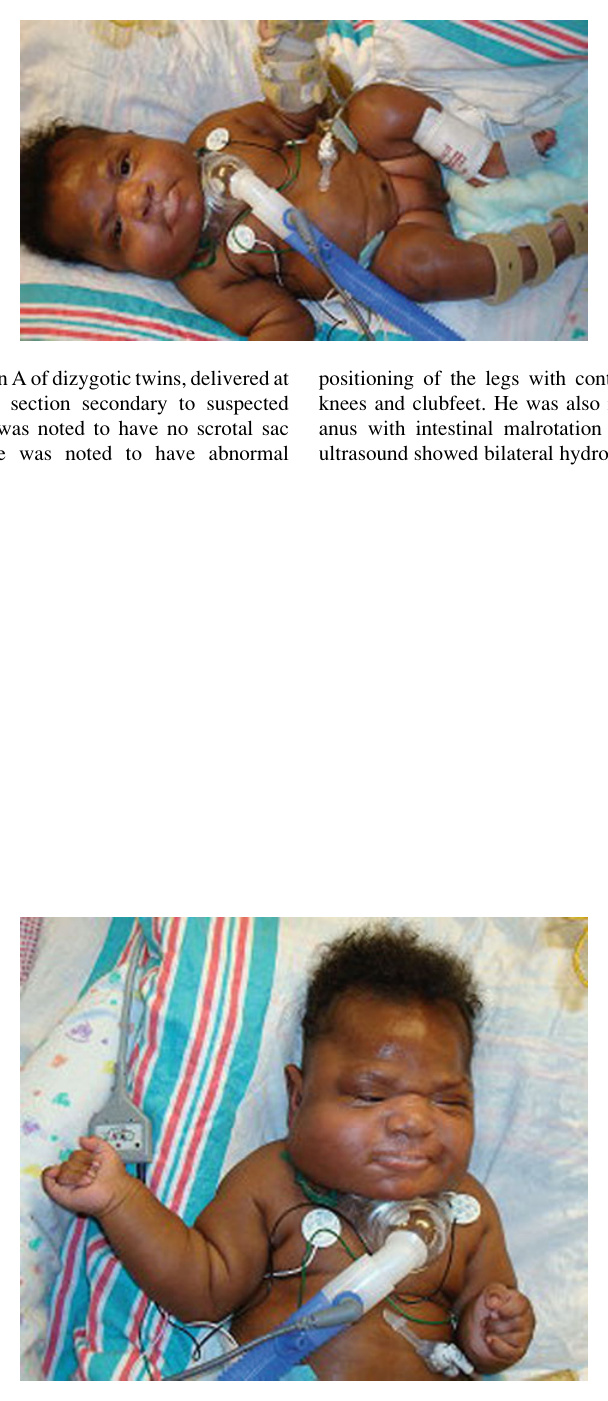
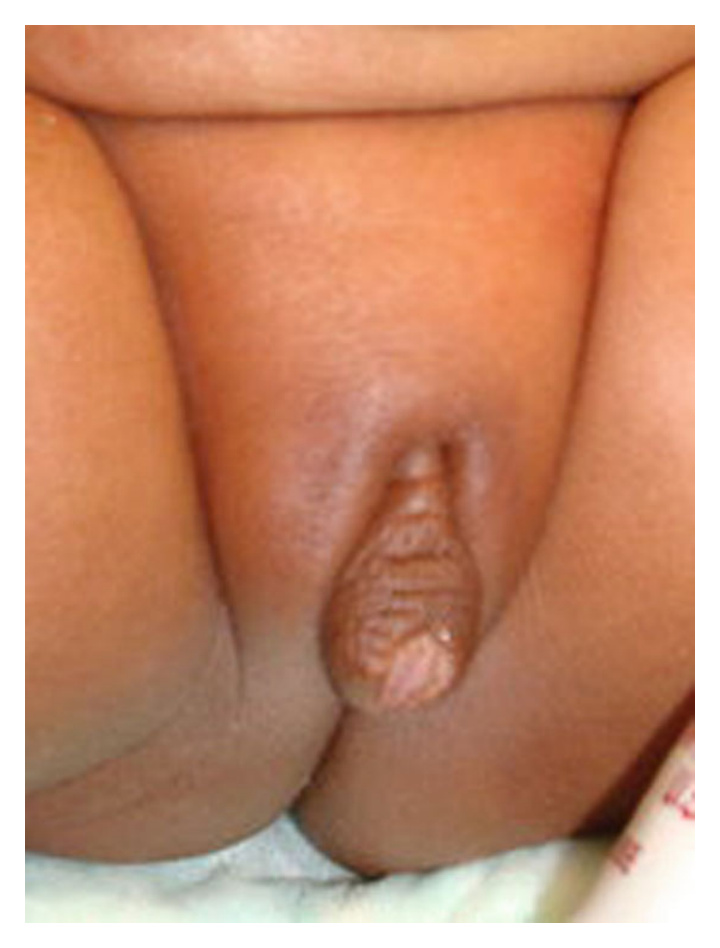
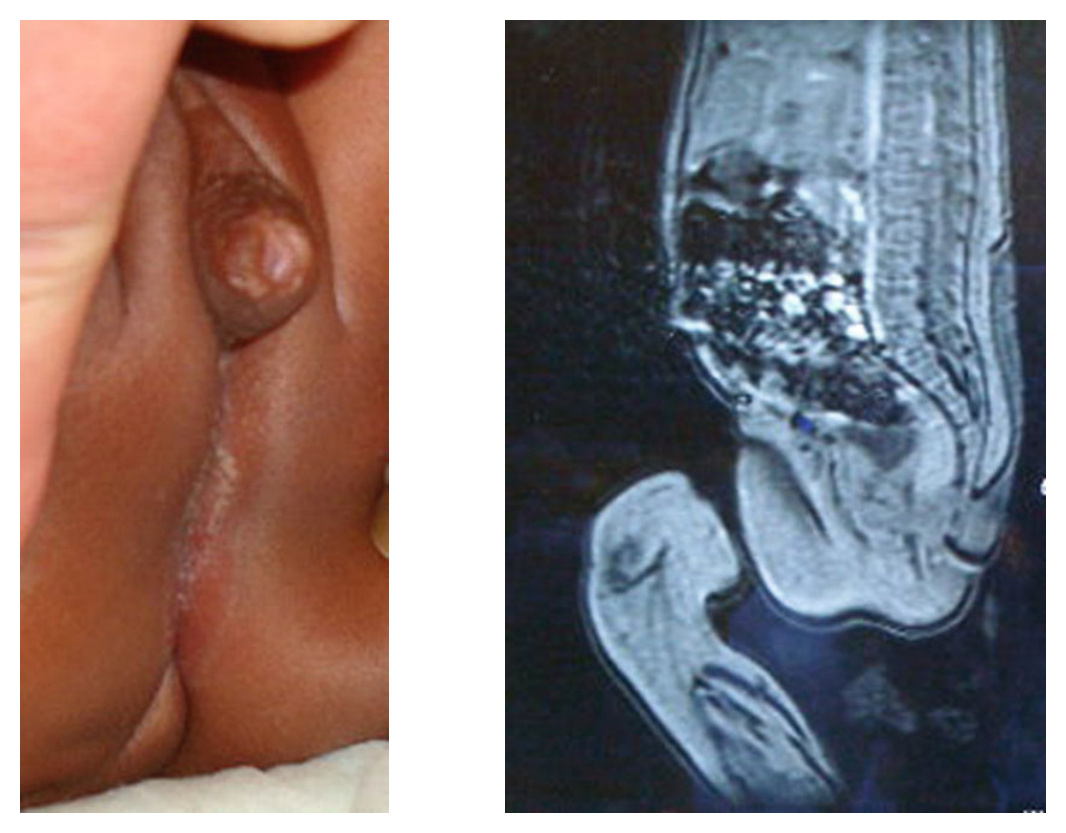
男性表现为阴囊发育不良(scrotal hypoplasia)、隐睾(cryptorchidism)及小阴茎(small penis);女性表现为阴蒂及小阴唇突出(prominent clitoris and labia minora)或阴蒂及小阴唇发育不良(hypoplastic clitoris and labia minora)。
髌骨缺失或发育不良
髌骨缺失(absent patella)或髌骨发育不良(hypoplastic patella)为本病定义性特征之一,但亦有研究指出髌骨缺失并非所有患者必备。
关节挛缩(关节弯曲)
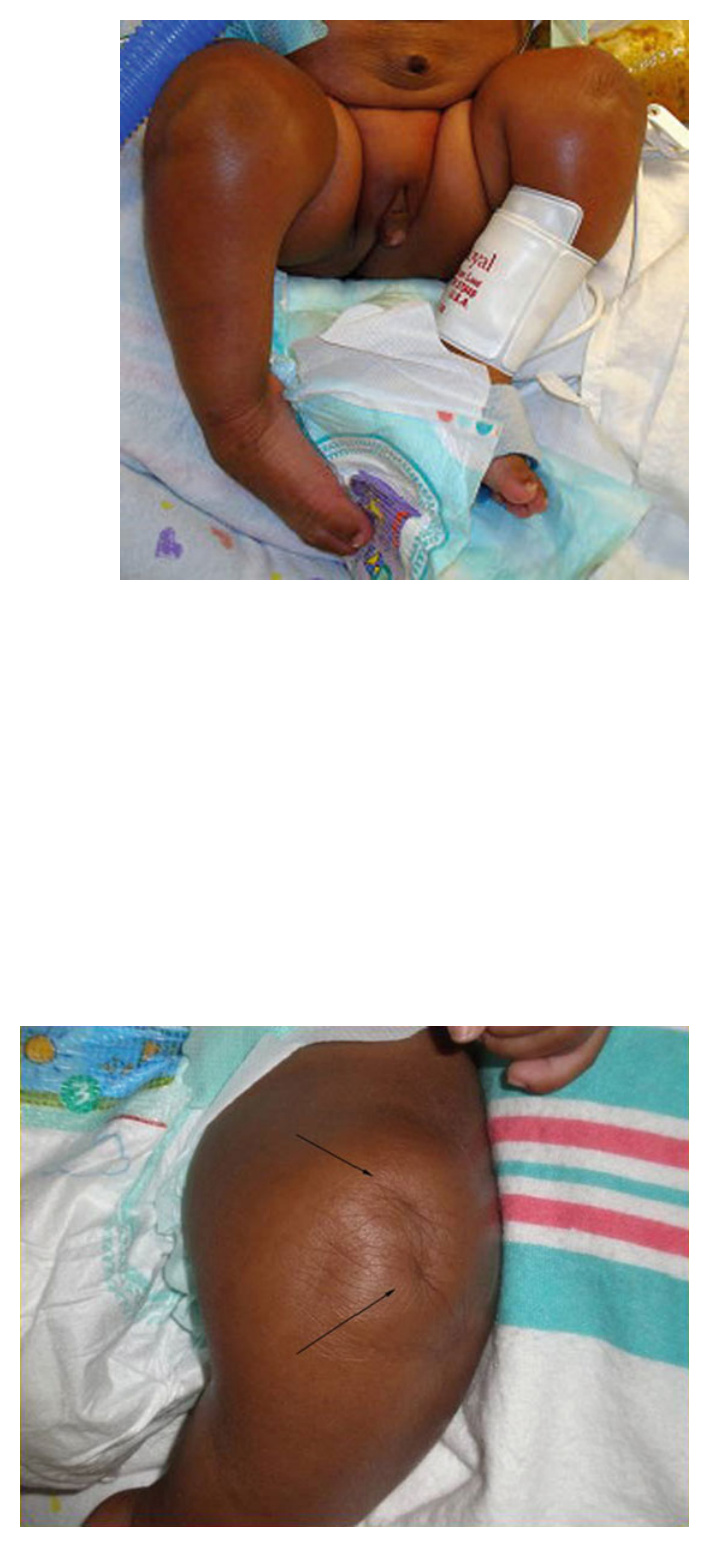
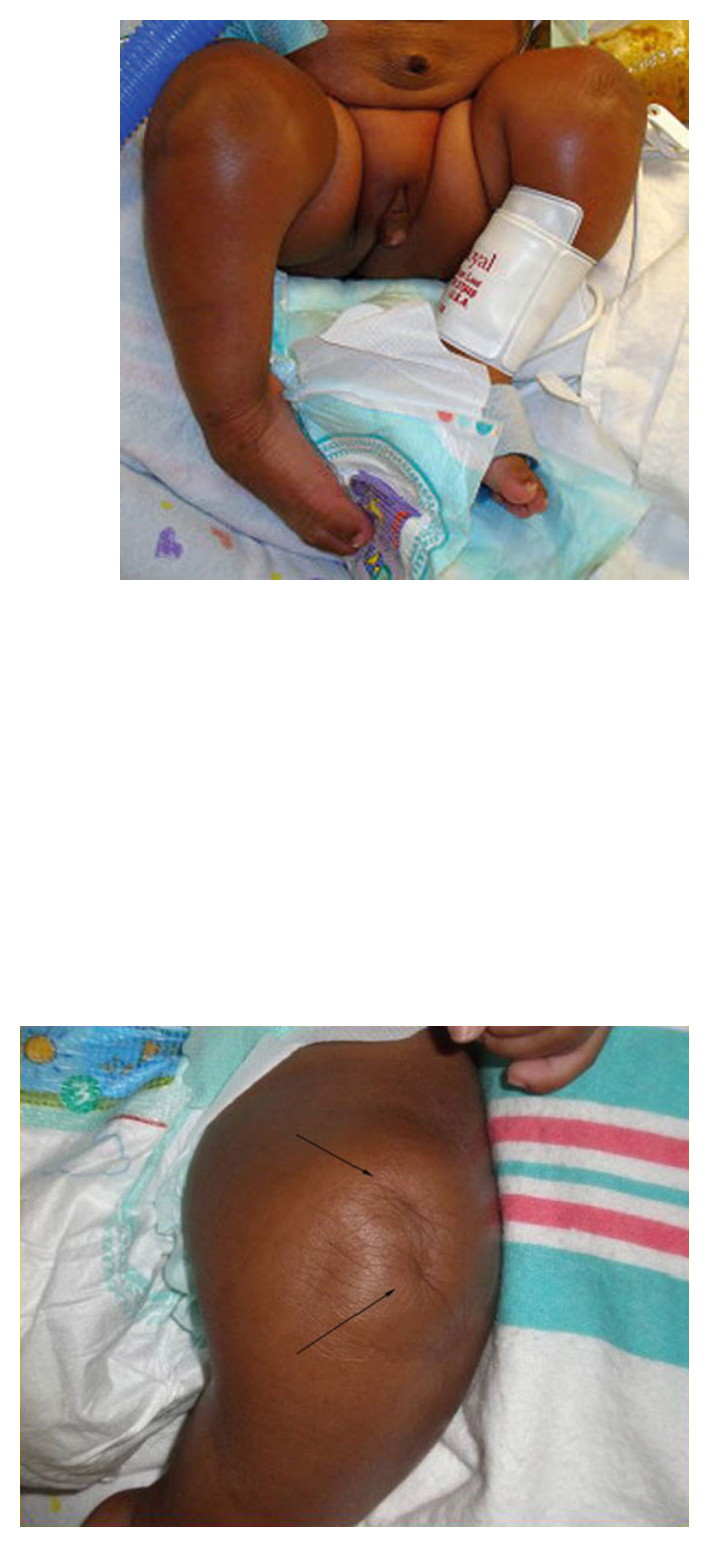
膝关节屈曲挛缩(flexion contractures)及膝部皮肤凹陷(skin dimples at the knee);髋关节屈曲挛缩或脱位/半脱位(dislocation/subluxation of the hips)。
其他骨骼异常
上肢短指(brachydactyly of the upper limbs)、畸形足(clubfeet)、骨盆骨发育不良(hypoplasia of pelvic bones)。
中枢神经系统异常
严重精神运动发育迟缓(severe psychomotor retardation)、肌张力低下(hypotonia)、新生儿期吞咽及喂养困难(swallowing and feeding difficulties during neonatal period)、胼胝体缺失(absence of corpus callosum)、脑室旁白质软化/巨脑室(colpocephaly)。
先天性心脏缺陷
室间隔缺损(VSD)、房间隔缺损(ASD)、动脉导管未闭(PDA)、卵圆孔未闭(PFO)、主动脉弓异常(abnormal aortic arch)。
肾脏异常
多囊肾(multicystic kidneys)、肾积水(hydronephrosis)、大型融合肾(large fused kidney)、膀胱输尿管反流(vesicoureteral reflux)。
肛门直肠异常
肛门闭锁(anal atresia)或肛门腹侧移位(ventral displacement of the anus)。
外胚层发育不良轻度表现
头皮毛发稀疏(sparse scalp hair)、牙齿萌出延迟(delayed tooth eruption)。
严重呼吸系统问题
呼吸暂停(apnea)、肺发育不良(pulmonary hypoplasia)。
听力损失
感音神经性听力损失(sensorineural hearing loss)已有报道。
2. 主要体格检查体征 (Major Clinical Signs)
颅面部特征
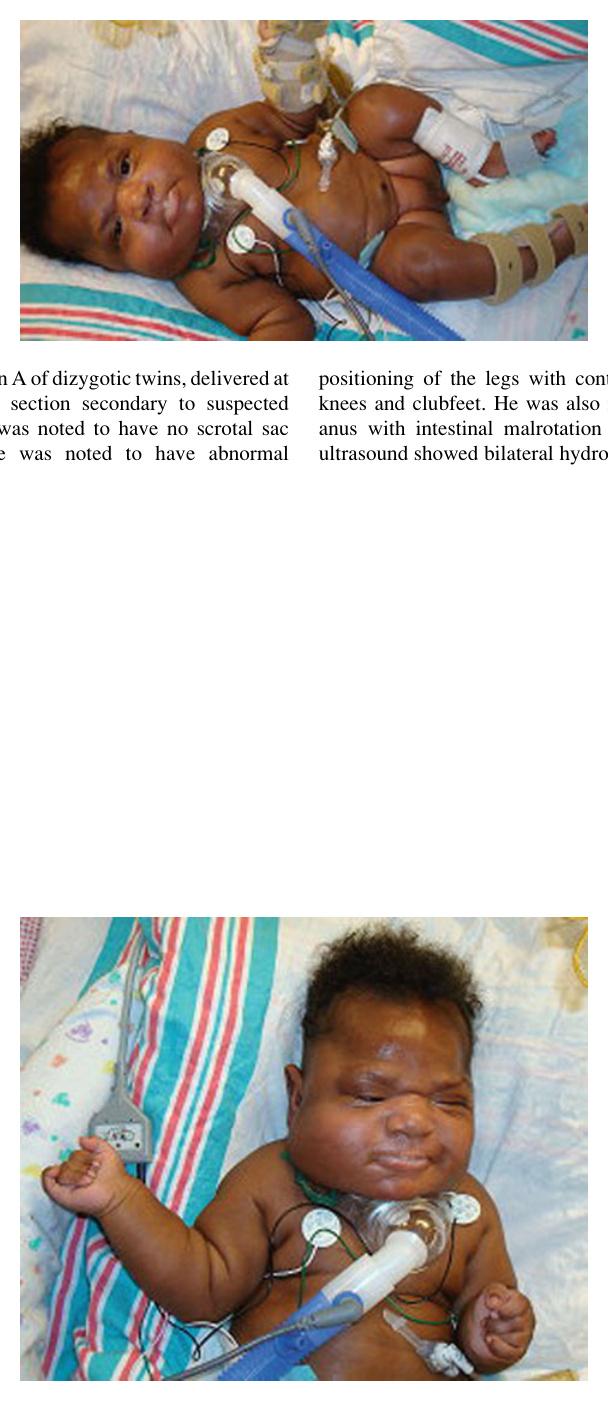
小头畸形(microcephaly)、异常颅形(abnormal skull shape)、眼距过宽(hypertelorism)、面中部发育不良(midfacial hypoplasia)、大而宽的鼻伴高鼻梁(a large, broad nose with a high nasal bridge)、小下颌(micrognathia)。图注补充:面容粗陋(coarse face)、枕部扁平(flat occiput)、双颞部狭窄(bitemporal narrowing)、鼻梁深横纹(deep crease across the nasal bridge)、短颈(short neck)。
手部体征
双手第2至第4指近端指间关节挛缩(proximal interphalangeal contractures of digits two to four)、第5指单一屈曲皱褶(single flexion crease on the fifth digit)、双侧通贯掌(transverse palmar creases bilaterally)。
膝部体征
膝部皮肤凹陷(knee dimples)、屈曲挛缩、腘窝蹼(popliteal webbing)、马蹄内翻足(talipes equinovarus)。
外生殖器体征
阴囊发育不良(scrotal hypoplasia)、双侧隐睾(bilateral cryptorchidism)、无阴囊(no scrotal sac)且睾丸不可触及(nonpalpable testes)。
肛门体征
肛门闭锁(imperforate anus)。
神经系统体征
肌张力低下、严重精神运动发育迟缓。
3. 并发症与生命安全风险 (Complications / Risks)
- 新生儿期呼吸暂停及肺发育不良导致呼吸衰竭
- 严重喂养及吞咽困难,需营养支持
- 严重精神运动发育迟缓
- 反复泌尿系统感染及肾功能损害(肾积水、膀胱输尿管反流、多囊肾)
- 先天性心脏病相关血流动力学异常
- 听力损失影响语言发育
- 关节挛缩及畸形足导致运动功能障碍
- 肛门闭锁及肠道旋转不良需外科干预
4. 自然病程、寿命预后与致死性亚型 (Prognosis & Lethal Forms)
- 预后较差,部分患者因严重呼吸系统并发症、中枢神经系统畸形及多系统畸形于新生儿期或婴儿期死亡。
- 存活者普遍存在严重精神运动发育迟缓。
- 长期随访需关注肾功能、心功能、听力、营养及发育情况。
辅助检查与全解剖部位影像征象 (Diagnostic Investigations)
骨骼放射平片解剖细分、颅颈磁共振MRI、组织病理学及分子诊断流程
放射影像学特征(各解剖部位细分征象 Radiologic Features)
- 小头畸形
- 异常颅形
- 枕部扁平
- 双颞部狭窄
- 原著未详细描述脊柱X线特征
- 骨盆骨发育不良(hypoplasia of pelvic bones)
- 髋关节脱位或半脱位
- 膝关节屈曲挛缩
- 髌骨缺失或发育不良(较大儿童X线可显示)
- 畸形足
- 短指(brachydactyly)
- 近端指间关节挛缩
颅脑与颅颈交界区 MRI (Craniocervical MRI)
- 胼胝体缺失(absence of corpus callosum)
- 髓鞘化延迟(delayed myelination)
- 额区显著DSF间隙(prominent DSF spaces in the frontal region)
- 巨枕大池(mega cisterna magna)
- 脑室旁白质软化/巨脑室(colpocephaly)
生长板组织病理学 (Histology / Pathology)
- 原著未提供详细组织病理学与超微电镜结构描述。
分子与细胞遗传学检测策略 (Mutation Analysis)
- 染色体核型分析:多数患者正常。
- 阵列比较基因组杂交(aCGH)/染色体微阵列分析:多数患者正常;需关注9q33.3–q34.1间质性缺失(累及NR5A1与LMX1B)。
- LMX1B、TBX4、WNT4、WNT7A基因突变检测:用于排除相关鉴别诊断,本病患者中未见致病突变。
- 致病基因尚未明确,必要时可进行全外显子组测序等研究性检测。
遗传咨询、再发风险与全生命周期健康监护
生殖腺嵌合体风险量化、产前鉴别生长曲线及 AAP 临床监护规范
再发风险量化评估 (Recurrence Risk Assessment)
- 患者同胞再发风险为25%(符合常染色体隐性遗传模式)。
- 患者后代再发风险一般不增加,除非配偶亦为携带者。
产前筛查、超声鉴别与分子确诊路径 (Prenatal Diagnosis)
产前超声
原著指出产前诊断尚未实现。理论上产前超声可能发现关节挛缩、畸形足、肾脏异常、心脏缺陷及中枢神经系统畸形等,但无特异性产前诊断标准。
分子遗传学检测
因致病基因尚未明确,目前无法进行针对性产前分子诊断;若家系中发现明确致病性拷贝数变异(如9q33.3–q34.1缺失),可针对该变异进行产前检测。
临床健康监护与多学科干预方案 (Management & Health Supervision Protocol)
呼吸与新生儿监护
新生儿期监测呼吸暂停及肺发育不良,必要时呼吸支持;严重呼吸系统问题为早期死亡重要原因。
喂养与营养支持
针对吞咽及喂养困难进行喂养评估,必要时管饲营养支持。
外科干预
肛门闭锁及肠道旋转不良需外科修复;畸形足、关节挛缩及髋关节脱位/半脱位需骨科评估与干预;隐睾需泌尿外科评估。
肾脏与泌尿系统随访
定期肾脏超声及肾功能评估,监测肾积水、膀胱输尿管反流及多囊肾;必要时泌尿外科干预。
心脏评估
超声心动图评估VSD、ASD、PDA、PFO及主动脉弓异常,必要时心脏专科随访。
神经发育与康复
定期发育评估,提供物理治疗、作业治疗及语言治疗;针对严重精神运动发育迟缓进行早期干预。
听力评估
听力筛查及听力学随访,及时发现感音神经性听力损失。
遗传咨询
向家庭解释推测的常染色体隐性遗传模式、25%同胞再发风险及目前产前诊断的局限性;建议家系成员进行遗传咨询。
权威原著参考文献 (References)
Harold Chen 著作全书收录之经典学术文献与循证医学来源
- Goldblatt J, Wallis C, Zieff S. A syndrome of hypoplastic patellae, mental retardation, skeletal and genitourinary anomalies with normal chromosomes. Clinical Genetics and Dysmorphology. 1988;2:91–93.
- Cormier-Daire V, Chauvet ML, Lyonnet S, et al. Genitopatellar syndrome: A new condition comprising absent patellae, scrotal hypoplasia, renal anomalies, facial dysmorphism, and mental retardation. Journal of Medical Genetics. 2000;37:520–524.
- Abdul-Rahman OA, La TH, Kwan A, et al. Genitopatellar syndrome: Expanding the phenotype and excluding mutations in LMX1B and TBX4. American Journal of Medical Genetics Part A. 2006;140A:1567–1572.
- Schlaubitz S, Yatsenko SA, Smith LD, et al. Ovotestes and XY sex reversal in a female with an interstitial 9q33.3-q34.1 deletion encompassing NR5A1 and LMX1B causing features of genitopatellar syndrome. American Journal of Medical Genetics Part A. 2007;143A:1071–1081.
- Armstrong L, Clarke JTR. Report of a new case of “genitopatellar” syndrome which challenges the importance of absent patellae as a defining feature. Journal of Medical Genetics. 2002;39:933–934.
- Bergmann C, Spranger S, Javaher P, et al. Genitopatellar syndrome, sensorineural hearing loss, and cleft palate. Journal of Oral and Maxillofacial Surgery. 2011;15:102–106.
- Bongers EMHF, van Kampen A, van Bokhoven H, et al. Human syndromes with congenital patellar anomalies and the underlying gene defects. Clinical Genetics. 2005;68:302–319.
- Lam ACF, Lai KKS, Chau ATC, et al. Subtelomeric 1q deletion syndrome causing patellar hypoplasia and limb deformities, features overlapping with genitopatellar syndrome. Clinical Genetics. 2009;76:102–107.
- Lammer EJ, Abrams L. Genitopatellar syndrome: Delineating the anomalies of female genitalia. American Journal of Medical Genetics. 2002;111:316–318.
- Lifchez CA, Rhead WJ, Leuthner SR, et al. Genitopatellar syndrome: Expanding the phenotype. American Journal of Medical Genetics. 2003;122A:80–83.
- Penttinen M, Koillinen H, Niinikoski H, et al. Genitopatellar syndrome in an adolescent female with severe osteoporosis and endocrine abnormalities. American Journal of Medical Genetics Part A. 2009;149A:451–455.
- Reardon W. Genitopatellar syndrome. A recognizable phenotype. American Journal of Medical Genetics. 2002;111:313–315.
- Sankararaman S, Kurepa D, Patra K, et al. Personal communication. 2010.