黏多糖贮积症III型
(Mucopolysaccharidosis III) 代谢与线粒体病 全本详注版| 致病基因 / 机制 | 染色体定位 | 遗传方式 | 发病率估计 |
|---|---|---|---|
| SGSH, NAGLU, HGSNAT, GNS | 17q25.3 (IIIA), 17q21 (IIIB), 8p11.1 (IIIC), 12q14 (IIID) | 常染色体隐性 | 1/24,000–1/200,000 |
疾病概述与分子发病机理 (Genetics & Basic Defects)
流行病学数据、致病突变位点、信号转导通路及组织病理生理学
流行病学与全篇概述
黏多糖贮积症III型(Mucopolysaccharidosis III, MPS III),又称Sanfilippo综合征,由Sanfilippo等人于1962年和1963年描述,特征为智力障碍和硫酸类肝素尿。1961年Harris曾报道一名6岁女孩,表现为肝脾肿大、骨骼检查正常及尿中大量硫酸类肝素排泄。MPS III是最常见的黏多糖贮积症之一,发病率约为1/24,000至1/200,000。该综合征包含四种生化异质性类型(MPS IIIA、IIIB、IIIC和IIID),临床上无法区分,因四种不同的溶酶体酶缺陷均涉及硫酸类肝素(heparan sulfate)的降解。A型在西北欧最常见,B型在东南欧最常见,C型和D型较为罕见。
遗传模式与家系特征
常染色体隐性遗传。患者同胞再发风险为25%。患者因智力障碍通常不生育后代。
致病基因与突变谱系
四种亚型由不同溶酶体酶缺陷引起:MPS IIIA由硫酸类肝素N-硫酸酯酶(heparan N-sulfatase,即sulfamidase)缺陷引起,基因SGSH定位于17q25.3;MPS IIIB由α-N-乙酰葡糖胺酶(α-N-acetylglucosaminidase)缺陷引起,基因NAGLU定位于17q21;MPS IIIC由乙酰辅酶A:α-葡糖胺N-乙酰转移酶(acetyl-CoA:α-glucosaminide-N-acetyltransferase)缺陷引起,基因HGSNAT定位于8p11.1;MPS IIID由N-乙酰-α-葡糖胺-6-硫酸酯酶(N-acetyl-α-glucosamine-6-sulfatase)缺陷引起,基因GNS定位于12q14。MPS IIIA突变类型包括错义突变(最常见)、提前终止突变和小缺失突变。MPS IIIB具有高度分子异质性,大多数突变为私有突变。MPS IIIC目前尚无突变分析可用。MPS IIID为移码突变和提前终止突变。
组织病理生理机制与解剖学缺陷
硫酸类肝素降解障碍导致其在溶酶体内贮积,引起细胞功能障碍,主要累及中枢神经系统,导致严重神经退行性变,而躯体症状相对轻微。
权威原著彩色临床图谱库 共 3 套超清图解
原著 200 DPI 高清无损裁切 • 完整保留图面 a, b, c, d 子标识 • 点击图面唤起全屏无损灯箱
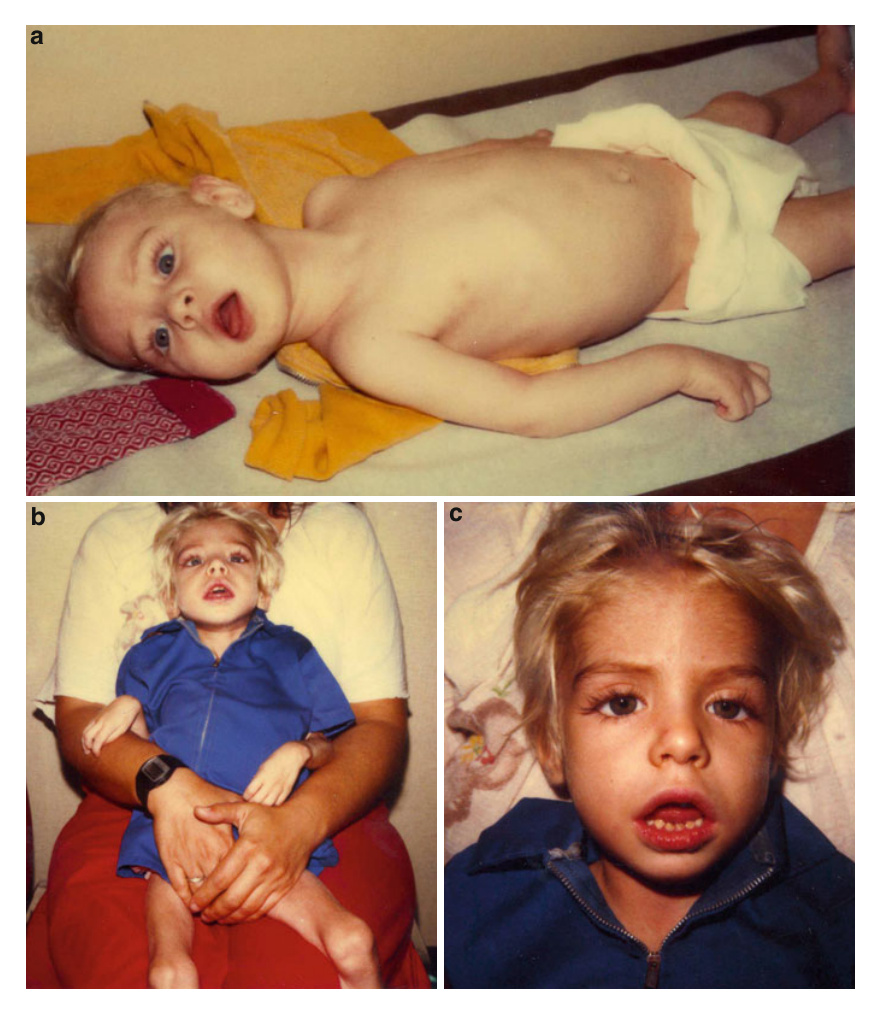
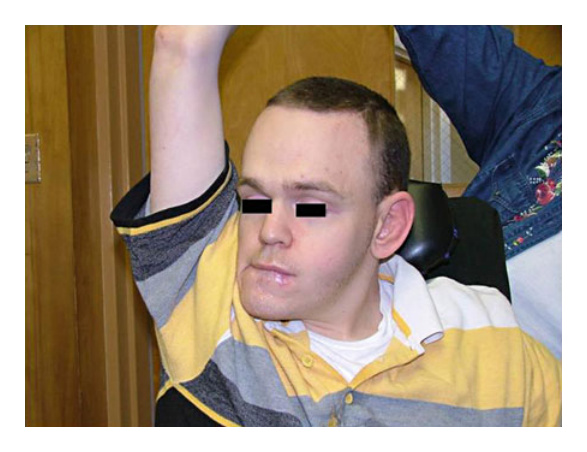
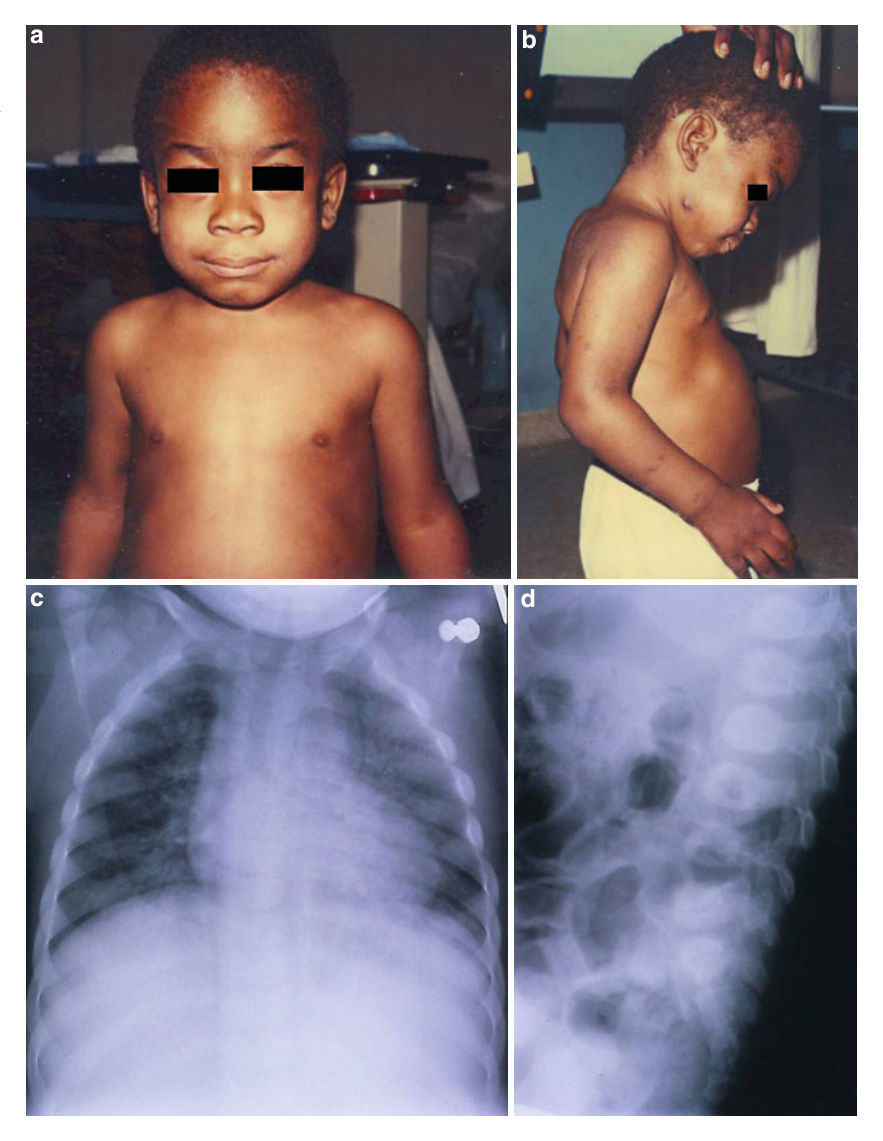
临床表型全貌与自然转归 (Clinical Features)
主要症状、核心体征、严重度分型、各期并发症及长期预后
1. 主要临床症状 (Major Clinical Symptoms)
严重中枢神经系统受累
3–4岁前发育里程碑接近正常。发育迟缓,尤其语言发育延迟(第一阶段通常始于1–4岁)。行为问题(第二阶段通常始于3–4岁):攻击性、多动、注意力缺陷、脾气爆发、破坏性行为、身体攻击、睡眠障碍(入睡困难、夜游、有时整夜清醒、哭叫、在屋内游荡、进入父母床、睡眠中说话、身体摇晃、咀嚼床单)、注意力持续时间短、明显情绪波动、自伤。进行性运动困难,由于痉挛和关节僵硬,以及行为问题逐渐消失,约10岁开始(标志第三和最终阶段)。中重度患者常见严重听力损失。大多数患者在6–10岁时出现严重神经退行性变,伴随社交和适应技能快速恶化(智力衰退)。进行性痴呆导致退缩和失去与环境的接触。癫痫发作不常见。患者通常在第二十年末或第三十年初死亡,但也有存活至第四十年的报道。
轻度躯体疾病
粗毛(多毛症),尤其背部多毛常见。大头畸形。大量鼻分泌物。反复上呼吸道感染。心脏体征和症状较其他类型黏多糖贮积症轻得多。轻度肝脾肿大。关节僵硬。反复且有时严重的腹泻,通常在儿童后期改善。青春期早发。
2. 主要体格检查体征 (Major Clinical Signs)
粗毛(多毛症)
多毛症常见,尤其背部。
大头畸形
头围增大。
大量鼻分泌物
鼻腔分泌物增多。
反复上呼吸道感染
反复发生。
轻度肝脾肿大
肝脏和脾脏轻度增大。
关节僵硬
关节活动受限。
3. 并发症与生命安全风险 (Complications / Risks)
- 严重神经退行性变导致智力衰退和痴呆
- 进行性运动困难导致轮椅依赖
- 严重听力损失
- 反复上呼吸道感染
- 反复腹泻
- 癫痫发作(不常见)
- 早期死亡(通常第二十年末或第三十年初)
4. 自然病程、寿命预后与致死性亚型 (Prognosis & Lethal Forms)
- A型:最严重类型,发病早,症状进展快,生存期短,通常青少年晚期死亡。
- B型:可保持功能至第三甚至第四十年。
- C型:临床异质性。
- D型:最少见类型,临床异质性。
辅助检查与全解剖部位影像征象 (Diagnostic Investigations)
骨骼放射平片解剖细分、颅颈磁共振MRI、组织病理学及分子诊断流程
放射影像学特征(各解剖部位细分征象 Radiologic Features)
- 轻度多发性骨发育不良(dysostosis multiplex)
颅脑与颅颈交界区 MRI (Craniocervical MRI)
- 皮质萎缩
- 胼胝体萎缩
- 髓鞘形成异常或延迟
- MRI表现可能先于明显神经系统症状出现
分子与细胞遗传学检测策略 (Mutation Analysis)
- 酶活性测定:可在培养皮肤成纤维细胞和外周血白细胞中测定各型MPS III酶活性。
- 突变分析:临床可通过序列分析和缺失/重复分析进行。MPS IIIA:错义突变(最常见)、提前终止突变、小缺失突变。MPS IIIB:高度分子异质性,大多数为私有突变。MPS IIIC:目前无突变分析。MPS IIID:移码突变和提前终止突变。
遗传咨询、再发风险与全生命周期健康监护
生殖腺嵌合体风险量化、产前鉴别生长曲线及 AAP 临床监护规范
再发风险量化评估 (Recurrence Risk Assessment)
- 患者同胞再发风险为25%。
- 患者后代:因智力障碍通常不生育。
产前筛查、超声鉴别与分子确诊路径 (Prenatal Diagnosis)
MPS IIIA产前诊断
在绒毛膜绒毛(CVS)和羊水细胞中采用放射性或荧光法测定硫酸酯酶活性;在已明确突变的家系中进行分子诊断。
MPS IIIB产前诊断
在培养羊水细胞和CVS中测定α-N-乙酰葡糖胺酶活性;通过二维电泳检测羊水中硫酸类肝素水平升高作为辅助方法;在已明确突变的家系中进行分子诊断。
MPS IIIC产前诊断
在羊水细胞和CVS中测定乙酰辅酶A:α-葡糖胺-N-乙酰转移酶活性;在已明确突变的家系中进行分子诊断。
MPS IIID产前诊断
采用分光光度法测定N-乙酰-α-葡糖胺-6-硫酸酯酶活性;在已明确突变的家系中进行分子诊断。
临床健康监护与多学科干预方案 (Management & Health Supervision Protocol)
支持治疗
抗生素治疗中耳炎和呼吸道感染;抗惊厥药控制癫痫发作。
肌肉松弛剂
用于疼痛性痉挛。
胃造瘘
维持充足营养。
特殊教育
特殊教育项目。
行为管理
改变家庭物理环境;药物治疗控制多动和攻击行为;利培酮治疗MPS IIIA儿童行为障碍安全有效。
物理治疗
维持关节活动度。
轮椅
用于移动。
暂托护理
提供合适的暂托住宿;识别专业和社区资源。
骨髓移植
可实现生化纠正,但智力结局令人失望。
权威原著参考文献 (References)
Harold Chen 著作全书收录之经典学术文献与循证医学来源
- Baehner, F., Schmiedeskamp, C., Krummenauer, F., et al. (2005). Cumulative incidence rates of the mucopolysaccharidoses in Germany. Journal of Inherited Metabolic Disease, 28, 1011–1017.
- Barone, R., Nigro, F., Triulzi, F., et al. (1999). Clinical and neuroradiological follow-up in mucopolysaccharidosis type III (Sanfilippo syndrome). Neuropediatrics, 30, 270–274.
- Beesley, C. E., Burke, D., Jackson, M., et al. (2003). Sanfilippo syndrome type D: Identification of the first mutation in the N-acetylglucosamine-6-sulphatase gene. Journal of Medical Genetics, 40, 192–194.
- Beesley, C. E., Young, E. P., Vellodi, A., et al. (1998). Identification of 12 novel mutations in the alpha-N-acetylglucosaminidase gene in 14 patients with Sanfilippo syndrome type B (mucopolysaccharidosis type IIIB). Journal of Medical Genetics, 35, 910–914.
- Beesley, C. E., Young, E. P., Vellodi, A., et al. (2000). Mutational analysis of Sanfilippo syndrome type A (MPS IIIA): Identification of 13 novel mutations. Journal of Medical Genetics, 37, 704–707.
- Blanch, L., Weber, B., Guo, X. H., et al. (1997). Molecular defects in Sanfilippo syndrome type A. Human Molecular Genetics, 6, 787–791.
- Bunge, S., Ince, H., Steglich, C., et al. (1997). Identification of 16 sulfamidase gene mutations including the common R74C in patients with mucopolysaccharidosis type IIIA (Sanfilippo A). Human Mutation, 10, 479–485.
- Bunge, S., Knigge, A., Steglich, C., et al. (1999). Mucopolysaccharidosis type IIIB (Sanfilippo B): Identification of 18 novel alpha-N-acetylglucosaminidase gene mutations. Journal of Medical Genetics, 36, 28–31.
- Chabas, A., Montfort, M., Martinez-Campos, M., et al. (2001). Mutation and haplotype analyses in 26 Spanish Sanfilippo syndrome type A patients: Possible single origin for 1091delC mutation. American Journal of Medical Genetics, 100, 223–228.
- Cleary, M. A., & Wraith, J. E. (1993). Management of mucopolysaccharidosis type III. Archives of Disease in Childhood, 69, 403–406.
- Defendi, G. I., Varma, S. (2009). Mucopolysaccharidosis type III. eMedicine from WebMD. Updated May 14, 2009. Available at: http://emedicine.medscape.com/article/948540-overview
- Di Natale, P., Annelia, T., Daniele, A., et al. (1993). Biochemical diagnosis of mucopolysaccharidoses. Experience of 297 diagnosis in a fifteen year period (1977–1991). Journal of Inherited Metabolic Disease, 16, 473–483.
- Di Natale, P., Pannone, N., D'Argenio, G., et al. (1987). First-trimester prenatal diagnosis of Sanfilippo C disease. Prenatal Diagnosis, 7, 603–605.
- Di Natale, P., Villani, G., Di Domenico, C., et al. (2003). Analysis of Sanfilippo A gene mutations in a large pedigree. Clinical Genetics, 63, 314–318.
- Di Natale, P., Villani, G. R., Esposito, S., et al. (1999). Prenatal diagnosis of Sanfilippo type A syndrome in a family with S66W mutant allele. Prenatal Diagnosis, 19, 993–994.
- He, W., Voznyi, Ya. V., Huijmans, J. G., et al. (1994). Prenatal diagnosis of Sanfilippo disease type C using a simple fluorometric enzyme assay. Prenatal Diagnosis, 14, 17–22.
- Jones, M. Z., Alroy, J., Rutledge, J. C., et al. (1997). Human mucopolysaccharidosis IIID: Clinical, biochemical, morphological and immunohistochemical characteristics. Journal of Neuropathology and Experimental Neurology, 56, 1158–1167.
- Karpova, E. A., Voznyi, Ya. V., Keulemans, J. L., et al. (1996). A fluorimetric enzyme assay for the diagnosis of Sanfilippo disease type A (MPS IIIA). Journal of Inherited Metabolic Disease, 19, 278–285.
- Kleijer, W. J., Huijmans, J. G., Blom, W., et al. (1984). Prenatal diagnosis of Sanfilippo disease type B. Human Genetics, 66, 287–288.
- Kleijer, W. J., Karpova, E. A., Geilen, G. C., et al. (1996). Prenatal diagnosis of Sanfilippo A syndrome: Experience in 35 pregnancies at risk and the use of a new fluorogenic substrate for the heparin sulphamidase assay. Prenatal Diagnosis, 16, 829–835.
- Lee-Chen, G. J., Lin, S. P., Ko, M. H., et al. (2002). Identification and characterization of mutations underlying Sanfilippo syndrome type A (mucopolysaccharidosis type IIIA). Clinical Genetics, 61, 192–197.
- Lee-Chen, G. J., Lin, S. P., Lin, S. Z., et al. (2002). Identification and characterisation of mutations underlying Sanfilippo syndrome type B (mucopolysaccharidosis type IIIB). Journal of Medical Genetics, 39, E3.
- Maire, I., Epelbaum, S., Piraud, M., et al. (1993). Second trimester prenatal diagnosis of Sanfilippo syndrome type C. Journal of Inherited Metabolic Disease, 16(3), 584–586.
- Meikle, P. J., Hopwood, J. J., Clague, A. E., & Carey, W. F. (1999). Prevalence of lysosomal storage disorders. Journal of American Medical Association, 281, 249–254.
- Minelli, A., Danesino, C., Lo Curto, F., et al. (1988). First trimester prenatal diagnosis of Sanfilippo disease (MPSIII) type B. Prenatal Diagnosis, 8, 47–52.
- Mossman, J., Young, E. P., Patrick, A. D., et al. (1983). Prenatal tests for Sanfilippo disease type B in four pregnancies. Prenatal Diagnosis, 3, 347–350.
- Muenzer, J. (1986). Mucopolysaccharidoses. Advances in Pediatrics, 33, 269–302.
- Neufeld, E. F., & Muenzer, J. (1995). The mucopolysaccharidosis. In C. R. Scriver, A. L. Beardet, W. S. Sly, & D. Valle (Eds.), The metabolic and molecular bases of inherited disease, vol II (7th ed., pp. 2465–2494). New York: McGraw-Hill.
- Nidiffer, F. D., & Kelly, T. E. (1983). Developmental and degenerative patterns associated with cognitive, behavioural and motor difficulties in the Sanfilippo syndrome: An epidemiological study. Journal of Mental Deficiency Research, 27(Pt 3), 185–203.
- Nowakowski, R. W., Thompson, J. N., & Taylor, K. B. (1989). Sanfilippo syndrome, type D: A spectrophotometric assay with prenatal diagnostic potential. Pediatric Research, 26, 462–466.
- Poorthuis, B. J., Wevers, R. A., Kleijer, W. J., et al. (1999). The frequency of lysosomal storage diseases in The Netherlands. Human Genetics, 105, 151–156.
- Sivakumur, P., & Wraith, J. E. (1999). Bone marrow transplantation in mucopolysaccharidosis type IIIA: A comparison of an early treated patient with his untreated sibling. Journal of Inherited Metabolic Disease, 22, 849–850.
- Thompson, J. N., Huffman, P., McConkie-Rosell, A., et al. (1993). Prenatal diagnosis of Sanfilippo syndrome type A by early amniocentesis. Biochemistry and Molecular Biology International, 29, 793–797.
- Toone, J. R., & Applegarth, D. A. (1988). Carrier detection in Sanfilippo A syndrome. Clinical Genetics, 33, 401–403.
- Ucar, S. K., Ozbaran, B., Demira, et al. (2010). Risperidone treatment of behavioral disorder in children with MPS IIIA. (引用信息不完整)