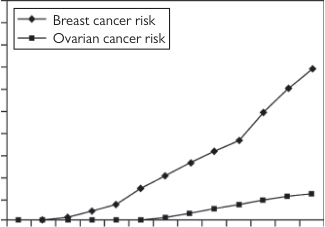
原书配图(第 599 页)
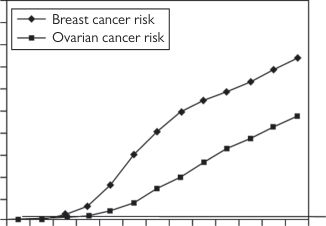
原书配图(第 599 页)
BRCA1和BRCA2的显性遗传突变是遗传性乳腺癌和遗传性乳腺癌/卵巢癌综合征(Hereditary Breast and Ovarian Cancer Syndrome, HBOC)中最常鉴定的单基因病因,但仅占家族性乳腺癌的约20%。BRCA1和BRCA2对总体乳腺癌的合计贡献率约为2%。
BRCA1是一个包含22个外显子的大基因,其中第11外显子约占编码序列的60%。大多数突变分散分布在整个基因中。所鉴定的突变中有87%预计会导致蛋白截短或BRCA1蛋白缺失。BRCA1蛋白参与许多重要的细胞通路,包括DNA修复和转录调控。几种奠基者突变(Founder mutations)在特定人群中很常见。在阿什肯纳兹犹太人(Ashkenazi Jewish)群体(起源于中欧和东欧,如波兰、德国、匈牙利、立陶宛、白俄罗斯、乌克兰和俄罗斯)中,BRCA1存在两种奠基者突变:c.68_69delAG(BIC: 185delAG)和c.5266dupC(BIC: 5382insC)。 BRCA2也是一个大基因,其第10和第11外显子约占编码序列的60%。突变分散在整个基因中,且大多数为截短突变。BRCA2蛋白参与DNA修复,BRCA2(极少数为BRCA1)的双等位基因突变会导致范可尼贫血(Fanconi anaemia, FA)。在阿什肯纳兹犹太人群(见上文)中,奠基者突变BRCA2 c.5946delT(BIC: 6174delT)在1%–1.5%的阿什肯纳兹犹太人中发现,占该族群早发性乳腺癌的约8%。单一突变——冰岛奠基者突变c.771_775del5(BIC: 999del5)——则占冰岛早发性家族性乳腺癌的大多数。
BRCA1/2中的许多错义突变属于意义未明变异(Variants of Uncertain Significance, VUS);大多数并不致病。参考相关专业数据库/网站有助于解读。对支持变异分类的数据进行多因素分析非常重要。由于乳腺癌是一种常见疾病,与罕见疾病相比,观察到的罕见变异更有可能是偶然伴随出现、而非致病性的。
肿瘤组织中的体细胞检测所识别出的提示具有“BRCA样特征”(‘BRCAness’)的突变特征谱比例,高于仅基于胚系检测的比例。这对于PARP抑制剂等靶向治疗可能具有指导价值(Davies 2017)。
40 50 60 70 80 卵巢癌风险 乳腺癌风险 90 100
患癌概率(%)
20 0 10 20 30
55 60 65 70 75 80
25 30 35 40 45 50 年龄
40 50 60 70 80 卵巢癌风险 乳腺癌风险 90 100 (b)
患癌概率(%)
20 0 10 20 30
25 30 35 40 45 50 年龄
55 60 65 70 75 80
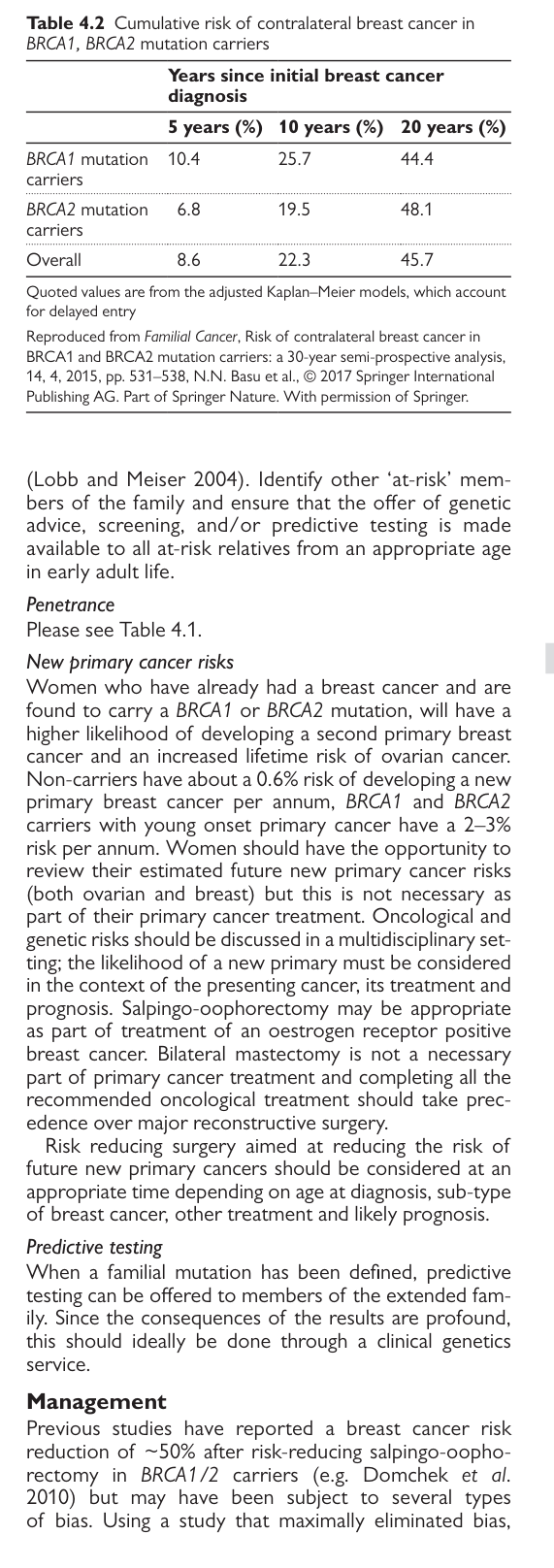
癌风险在各个年龄段的分布相对更加平缓,但随年龄增长逐渐上升,从较年轻时(40–59岁)的每年约1%上升至较年长时的每年2%。对于阿什肯纳兹奠基者突变,BRCA1 c.68_69delAG和c.5266dupC突变携带者至70岁时的平均乳腺癌风险相似(分别为64%和67%);然而,c.5946delT突变携带者的风险则低得多(43%)。携带者对应的卵巢癌终生风险分别为14%、33%和20%。
对侧乳腺癌的风险很高。相比之下,BRCA2携带者的卵巢癌风险在50岁以下较低,但在50–59岁年龄段急剧上升。男性突变携带者患乳腺癌的风险也增加(至70岁时约为6%)。
BRCA2突变携带者患前列腺癌和胰腺癌的风险也增加,可能还包括胆囊癌/胆管癌。前列腺癌的累积风险至50岁时为0.1%,60岁时为1.6%,70岁时为7.5%,80岁时为19.8%;男性突变携带者所有癌症的累积风险至50岁时为4%,60岁时为13%,70岁时为32%。
三阴性乳腺癌(Triple-negative breast cancer, TNBC)(雌激素受体、孕激素受体、HER2阴性乳腺癌) 占所有乳腺癌的约12%–15%。在一组>1800例未经乳腺癌或卵巢癌家族史筛选的TNBC确诊患者中,发现8.5%携带BRCA1突变,2.7%携带BRCA2突变,1.2%携带PALB2突变(Couch等 2015)。
临床路径
病史采集:要点
- 绘制三代家系图,特别询问乳腺癌、卵巢癌、前列腺癌以及其他相关恶性肿瘤。
注:良性卵巢肿瘤、交界性及黏液性恶性肿瘤以及生殖细胞肿瘤与此无关——BRCA1/2突变主要与浆液性乳头状囊腺癌(Serous papillary cystadenocarcinoma)相关。这一点非常重要,因为尤其是黏液性和交界性肿瘤在年轻人群中更为多见,若缺乏病理确诊,单纯的卵巢癌病史可能产生误导。
体格检查:要点
通常对遗传评估目的而言并非必需。
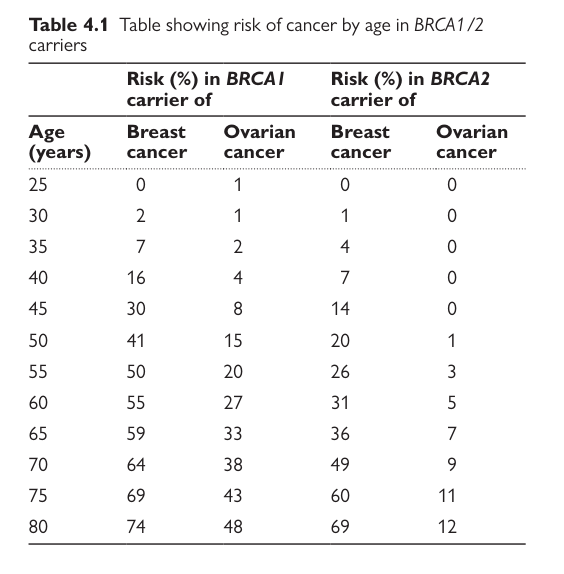
遗传咨询建议 就BRCA1/2突变携带者自身的健康风险向其提供咨询(见表4.1和表4.2),并安排适当的筛查和/或降低风险的手术
BRCA1携带者风险(%)
BRCA2携带者风险(%)
年龄 (岁)
乳腺癌
卵巢癌
乳腺癌
卵巢癌
25
30
35
40
16
45
30
14
50
41
15
20
55
50
20
26
60
55
27
31
65
59
33
36
70
64
38
49
75
69
43
60
11
80
74
48
69
12
自初次确诊乳腺癌后的年数
5年(%) 10年(%) 20年(%)
BRCA1突变携带者
10.4 25.7 44.4
BRCA2突变携带者
6.8 19.5 48.1
总体 8.6 22.3 45.7
所引用的数值源自校正了延迟入组的调整后Kaplan–Meier模型
改编自《Familial Cancer》,Risk of contralateral breast cancer in BRCA1 and BRCA2 mutation carriers: a 30-year semi-prospective analysis,14, 4, 2015, pp. 531–538, N.N. Basu et al.,© 2017 Springer International Publishing AG。属于Springer Nature旗下。经Springer许可使用。
(Lobb与Meiser 2004)。确认家系中其他“高风险”成员,确保从成年早期的适当年龄起,为所有高风险亲属提供遗传咨询、筛查和/或预测性检测(Predictive testing)。
新发第二原发癌风险 已经患有乳腺癌并被发现携带BRCA1或BRCA2突变的女性,发生第二原发性乳腺癌的可能性更高,且卵巢癌终生风险增加。非携带者每年发生新发原发性乳腺癌的风险约为0.6%,而患有早发性原发癌的BRCA1和BRCA2携带者每年风险为2%–3%。女性应有机会评估其未来新发原发癌的估计风险(包括卵巢癌和乳腺癌),但这并不构成其初发肿瘤治疗方案中必须包含的部分。肿瘤学风险与遗传风险应在多学科协作(MDT)背景下进行讨论;必须结合当前肿瘤的情况、治疗手段及预后综合考虑发生新发原发癌的可能性。输卵管-卵巢切除术(Salpingo-oophorectomy)可适宜作为雌激素受体阳性乳腺癌治疗的一部分。双侧乳房切除术并非原发癌治疗的必要组成部分,完成所有推荐的肿瘤学治疗应优先于大型乳房重建手术。
旨在降低未来新发原发癌风险的预防性手术,应根据确诊年龄、乳腺癌亚型、其他治疗手段及预期预后,在适当的时机予以考虑。
预测性检测 当家族性致病突变明确后,可为扩大家系成员提供预测性检测。由于检测结果的影响深远,理想情况下应由临床遗传学专业门诊进行。
临床管理 既往研究报道,BRCA1/2携带者在行降低风险的输卵管-卵巢切除术后,乳腺癌风险降低约50%(例如Domchek等 2010),但这些研究可能受到多种偏倚的影响。采用一项最大限度消除偏倚的研究,
Heemskerk-Gerritsen等(2015)并未发现其对乳腺癌风险具有保护效应的证据。手术诱导的过早绝经对降低乳腺癌风险所能达到的实际幅度目前仍不明确,可能并不存在或远小于既往认识。
由于目前尚无已证实的早期卵巢癌有效筛查方法,高风险女性在完成生育后,可探讨并考虑接受该预防性手术以应对其卵巢癌风险。最新的英国国家卫生与临床优化研究所(National Institute for Health and Care Excellence, NICE)指南(2013)指出,雌激素替代治疗的健康获益可能大于因激素暴露导致的乳腺癌风险轻度增加。对于仍保留子宫的女性,理想的替代疗法应考虑单用雌激素联合局部(宫内)孕激素缓释系统以保护子宫内膜。
预防性乳房切除术是一项高度个人化的决定。接受该手术的女性中高达30%会出现手术并发症。保护效益必须与可能的手术并发症、心理问题、治疗毒性以及确诊乳腺癌后的死亡几率进行权衡。
体育锻炼与青春期避免肥胖 King等(2003)在一项针对携带BRCA1/2遗传性突变的阿什肯纳兹犹太女性的大型研究中发现,青春期坚持体育锻炼且无肥胖与乳腺癌发病年龄显著推迟相关。
口服避孕药(Oral Contraceptive Pill, OCP) 一项病例对照研究(Narod等 1998)显示,使用口服避孕药6年后卵巢癌发生率降低60%,但有人担忧口服避孕药可能增加有该病家族史女性的乳腺癌风险。Narod等(2002)证实,曾使用过OCP或使用OCP超过5年的BRCA1突变携带者,早发性乳腺癌的风险可能升高(相对风险 RR 分别为1.2和1.33)。
监测策略 另参见第4章“癌症”中的“癌症监测方法”,第552页,尤其是表4.6。 • 乳腺X线摄影(钼靶)筛查可降低50–65岁普通人群女性的乳腺癌相关死亡率。 • 乳腺超声(USS)用于对触及的乳房肿块或钼靶异常进行诊断性评估。有时用于对有极早发家族史的非常年轻的女性(<30岁)进行筛查,但将其作为筛查手段尚无临床循证依据。超声无法检出微钙化。
- 乳腺MRI的敏感度可能高于钼靶,但特异度相对较低。MRI可提高<50岁的BRCA突变携带者早期乳腺癌的检出率,且在大多数指南中均推荐作为年度监测手段。
- 乳房自我健康意识(Breast awareness)。应建议女性保持“乳房自知意识”;大多数乳腺癌女性患者是自行发现肿块的。
- 癌抗原125(Cancer Antigen 125, CA125)筛查与卵巢超声。作为筛查方法的有效性尚未被证实。
特约专家顾问:Diana Eccles,英国南安普敦大学医院医学院癌症科学部主任。
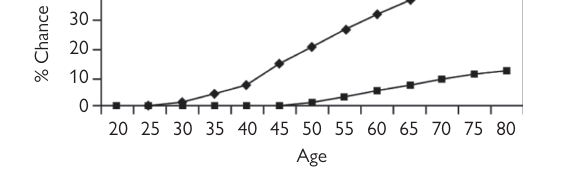
图 4.1 (a) BRCA1. (b) BRCA2.(第 542 页)
参考文献
Antoniou A, Pharoah PD, Narod S, et al. Average risks of
breast and ovarian cancer associated with mutations in BRCA1 or BRCA2 detected in case series unselected for family history: a combined analysis of 22 studies. Am J Hum Genet 2003; 72: 1117–30. Basu NN, Ingham S, et al. Risk of contralateral breast cancer in
BRCA1 and BRCA2 mutation carriers: a 30 year semi-prospective analysis. Fam Cancer 2015; 14: 531. Breast Cancer Information Core (BIC). https://research.nhgri.
nih.gov/bic. Breast Cancer Linkage Consortium. Cancer risks in BRCA2 muta
tion carriers. J Natl Cancer Inst 1999; 91: 1310–16. Couch FJ, Hart SN, Sharma P, et al. Inherited mutations in 17
breast cancer susceptibility genes among a large triple-negative breast cancer cohort unselected for family history of breast cancer. J Clin Oncol 2015; 33: 304–11. Davies H, Glodzik D, et al. HRDetect is a predictor of BRCA1
and BRCA2 deficiency based on mutational signatures. Nat Med 2017; epub Mar13. Domchek SM, Friebel TM, Singer CF, et al. Association of risk-
reducing surgery in BRCA1 or BRCA2 mutation carriers with cancer risk and mortality. JAMA 2010; 304: 967–75. Eisen A, Weber BL. Prophylactic mastectomy for women with
BRCA1 and BRCA2 mutations—facts and controversy [editorial]. N Engl J Med 2001; 345: 207–8. Heemskerk-Gerritsen BA, Seynaeve C, van Asperen CJ, et al.
Breast cancer risk after salpingo-oophorectomy in healthy BRCA1/2 mutation carriers: revisiting the evidence for risk reduction. J Natl Cancer Inst 2015; 107: pii: djv033. Kauff ND, Satogopan JM, Robson ME, et al. Risk-reducing
salpingo-oophorectomy in women with a BRCA1 or BRCA2 mutation. N Engl J Med 2002; 346: 1609–15. Kennedy RD, Quinn JE, Johnston PG, Harkin DP. BRCA1: mecha
nisms of inactivation and implications for management of patients [review]. Lancet 2002; 360: 1007–14. King MC, Marks JH, Mandell JB; New York Breast Cancer Study
Group. Breast and ovarian cancer risks due to inherited mutations in BRCA1 and BRCA2. Science 2003; 302: 643–6. Kriege M, Brekelmans CT, Boetes C, et al. Efficacy of MRI
and mammography for breast cancer screening in women with a familial or genetic predisposition. N Engl J Med 2004; 351: 427–37. Leach MO, Boggis CR, Dixon AK, et al.; MARIBS study group.
Screening with magnetic resonance imaging and mammography of a UK population at high familial risk of breast cancer: a prospective multicentre cohort study (MARIBS). Lancet 2005; 365: 1769–78. Liberman L. Breast cancer screening with MRI—what are the data
for patients at high risk? N Engl J Med 2004; 351: 497–500.
Lobb E, Meiser B. Genetic counseling and prophylactic surgery in
women from families with hereditary breast or ovarian cancer [commentary]. Lancet 2004; 363: 1841–2. Miller AB, To T, Baines CJ, Wall C. Canadian National Breast
Screening Study-2: 13-year results of a randomized trial in women aged 50–59 years. J Natl Cancer Inst 2000; 92: 1490–9. Narod S. What options for treatment of hereditary breast can
cer? [editorial]. Lancet 2002; 359: 1451. Narod SA, Brunet JS, Ghadirian P, et al. Tamoxifen and risk of
contralateral breast cancer in BRCA1 and BRCA2 mutation carriers: a case-control study. Lancet 2000; 356: 1876–81. Narod SA, Dube MP, Klijn J, et al. Oral contraceptives and the risk
of breast cancer in BRCA1 and BRCA2 mutation carriers. J Natl Cancer Inst 2002; 94: 1773–9. Narod SA, Risch H, Moslehi R, et al. Oral contraceptives and the
risk of hereditary ovarian cancer. N Engl J Med 1998; 339: 424–8. National Institute for Health and Care Excellence. Familial breast
cancer: classification, care and managing breast cancer and related risks in people with a family history of breast cancer. Clinical
guideline CG164, 2013. https://www.nice.org.uk/Guidance/CG164. Phillips KA, Milne RL, Rookus MA, et al. Tamoxifen and the risk
of contralateral breast cancer for BRCA1 and BRCA2 mutation carriers. J Clin Oncol 2013; 25: 3091–9. Rebbeck TR, Lynch HT, Neuhausen SL, et al. Prophylactic oopho
rectomy in carrieras of BRCA1 or BRCA2 mutations. N Engl J Med 2002; 346: 1616–22. Tabar L, Fagerberg G, Chen HH, et al. Efficacy of breast cancer
screening by age. New results from the Swedish Two-County Trial. Cancer 1995; 75: 2507–17. Teh W, Wilson AR. The role of ultrasound in breast cancer
screening. A consensus statement by the European Group for Breast Cancer Screening. Eur J Cancer 1998; 34: 449–50. Warner E, Plewes DB, Shumak RS, et al. Comparison of breast
magnetic resonance imaging, mammography, and ultrasound for surveillance of women at high risk for hereditary breast cancer. J Clin Oncol 2001; 19: 3524–31.