新发突变(De novo mutation, DNM)是近亲结婚率极低的非近亲婚配夫妇后代中发生严重遗传性发育障碍(developmental disorders)最常见的原因(McRae et al. 2016)。而在近亲婚配家族中,隐性遗传疾病是发育障碍的最常见病因,其中约有5%患有发育障碍的患儿该病因是由DNM导致的。
取决于胚胎发育过程中突变发生的时机,可能会出现不同类型的生殖系嵌合体(Germline mosaicism)(参见图 1.14);星号
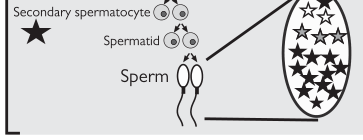
图 1.14 Schematic diagram depicting the different types of germline mosaicism that can occur depending upon the time in development at which a new mutation occurs. Reprinted by permission from Macmillan Publishers Ltd: Nature Genetics, Raheleh Rahbari et al.(第 42 页)
受精卵(Zygote)
[体细胞和/或生殖系嵌合体] [生殖系嵌合体]
内细胞团(Inner cell mass)
上胚层(Epiblast)
形成原始生殖细胞(PGC)前约10次复制
原条(Primitive streak)
原始生殖细胞(Primordial germ cell, PGC)
男性
形成PGC后,男性经历约24次复制,女性经历约20次复制
约15岁青春期 出生
精原
干细胞(stem cells)
在干细胞自我更新期间,每年约发生23次复制
自我更新(Renewal)
分化(Differentiation)
分化过程中约经历4次复制
精子(Sperm)
指示突变可能发生的不同阶段以及随之产生的嵌合体类型。多个箭头指示原始生殖细胞(primordial germ cells, PGCs)与其他组织的分离(这提示血液细胞系和生殖细胞系均起源自胚胎的多个细胞)。若生殖系嵌合变异在父母的血液中亦可被检测到,则很可能是建立在父母体内中胚层组织与PGC分离之前(空心星号)。对于仅在同胞间共享的嵌合突变,一种可能的解释是该突变发生在
下胚层(Hypoblast)
[血液及其他组织] 中胚层(Mesoderm) 内胚层(Endoderm)
[肝脏及其他组织]
外胚层(Ectoderm) [神经系统及其他组织]
女性
未成熟
卵母细胞(oocyte)
卵母细胞(Oocyte)
原书配图(第 100 页)
20 25 30 35
患病率(%)
20 0.24 0.26 0.28 0.29 0.31 0.33 0.35 0.37 0.39
0.45
0.25 0.27 0.29 0.31 0.32 0.34 0.36 0.38 0.40
25
0.40
0.26 0.28 0.30 0.32 0.34 0.35 0.37 0.39 0.41
母亲年龄(岁)
0.35
30
0.27 0.29 0.31 0.33 0.35 0.36 0.38 0.40 0.42
0.28 0.30 0.32 0.34 0.36 0.38 0.39 0.41 0.43
0.30
35
0.29 0.31 0.33 0.35 0.37 0.39 0.40 0.42 0.44
0.25
0.30 0.32 0.34 0.36 0.38 0.40 0.42 0.43 0.45
40
0.31 0.33 0.35 0.37 0.39 0.41 0.43 0.45 0.46
45
0.32 0.34 0.36 0.38 0.40 0.42 0.44 0.46 0.47

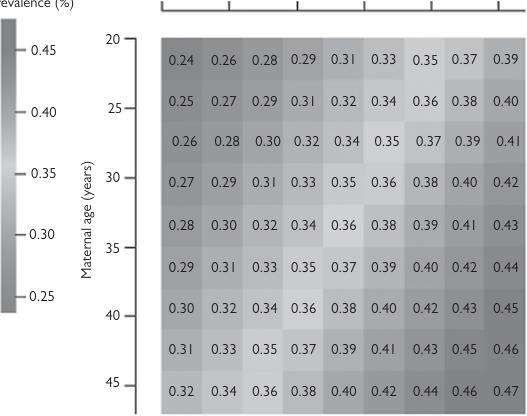
图 1.15 Prevalence of live births with developmental disorders caused by dominant de novo mutations (DNMs). The prevalence within the general population is provided as a percentage for combinations of parental ages, extrapolated from the maternal and paterna(第 43 页)
嵌合体父母体内PGC与中胚层发生分离之后(阴影星号)。
Rahbari 等(2016)评估得出,在所有DNMs中,同胞复发风险约为1.3%;这一数字与早期的经验性研究相吻合。如果对父母进行深度测序(deep sequencing)未检测到该突变,则同胞复发风险较低,可能约为0.5%,并且推定该突变发生在PGC分离之后。
父母年龄(Parental age) 由于所有细胞中都会发生背景突变过程,突变会随时间缓慢累积。在父源与母源配子发生(Gametogenesis)过程中,有丝分裂次数存在显著差异(参见图 1.15),导致与女性配子相比,男性配子中存在的突变数量增加。(此外,极小一部分突变会赋予精原祖细胞选择性优势;参见第6章“妊娠与生育力”中的“父亲年龄”,第772页。)随着父母年龄增长,由于新发显性突变导致的发育障碍活产儿患病率升高,
父亲年龄(岁)
40 45
如图 1.15 所示。请注意,一对20岁出头的年轻夫妇因DNM而生育患发育障碍患儿的概率为0.24%(约2.5/1000活产儿),大约只有40多岁中期夫妇风险率0.47%(约5/1000活产儿)的一半。请注意,该图表是不对称的,表明父亲年龄对DNMs的影响强于母亲年龄。 特约专家顾问:Matthew Hurles,英国欣克斯顿惠康桑格研究所人类遗传学主管。
参考文献(References)
Alexandrov LB, Jones PH, Wedge DC, et al. Clock-like muta
tional processes in human somatic cells. Nat Genet 2015; 47: 1402–7. McRae JF, Clayton S, Fitzgerald TW, et al. (2016, under
review). Prevalence, phenotype and architecture of devel opmental disorders caused by de novo mutation. doi: http:// dx.doi.org/10.1101/049056. http://biorxiv.org/content/ early/2016/06/16/049056. Rahbari R, Wuster A, Lindsay SJ, et al.; UK10K Consortium,
Hurles ME. Timing, rates and spectra of human germline mutation. Nat Genet 2016; 48: 126–33.